What Kind of Pie Are You Based on Your Pi Score?
Pi might be an irrational number, but your Pi score says a lot about the way you approach challenges, numbers, and maybe even dessert. This lighthearted quiz‑style post is meant to be fun, shareable, and just a little bit tasty, perfect to pair with PracticePi sessions and a slice of something sweet.
How This Works
Here’s the game:
Think about your current Pi score (how many digits you can confidently recall, in order).
Find the range that fits you below.
Read your “pie personality” and share it with friends, classmates, or family.
If you’re using PracticePi, you can even challenge others to level up their score and “unlock” a new pie type.
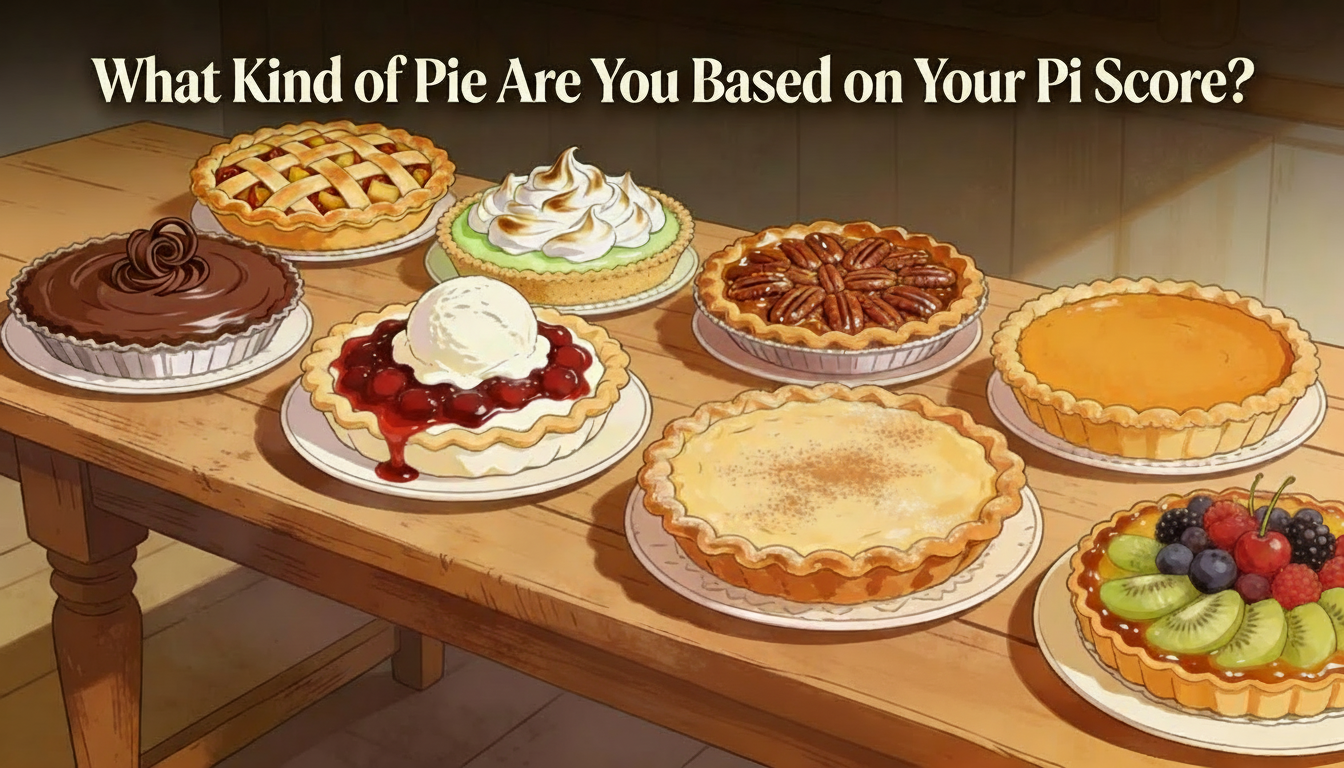
0–5 Digits: The Classic Apple Pie
If you know pi as “3.14” (with maybe one or two digits after that on a good day), you’re a Classic Apple Pie.
You:
Like things simple, warm, and approachable.
Don’t need to memorize a hundred digits to enjoy math or dessert.
Prefer fun, low‑pressure learning over competition.
You’re probably the person who convinces everyone else to join the Pi Day fun in the first place. You might not know pi’s 20th digit, but you’re the one who brings the actual pie, and honestly, that’s just as important.
Try this in PracticePi: Set a tiny goal, say, 8 digits, and see how quickly you can bump yourself from “one slice” to “full pie.”
6–15 Digits: The Chocolate Cream Pie
You’ve gone beyond the basics and can comfortably rattle off a good stretch of digits. That makes you a Chocolate Cream Pie.
You:
Enjoy a bit of flair and like to surprise people.
Might pretend you “forgot” your digits, then casually recite them when someone challenges you.
Appreciate that practicing pi feels kind of like training a party trick and your brain at the same time.
You’re the friend who turns a dull moment into a spontaneous challenge: “Bet you can’t beat my Pi score.” And you usually win.
Try this in PracticePi: Turn practice into a game, time yourself for one‑minute sprints, and see how many correct digits you can lock in before the buzzer.
16–30 Digits: The Key Lime Pie
If you’re holding 16–30 digits in your head, you’re officially in Key Lime Pie territory.
You:
Have a tangy mix of curiosity and stubbornness,you like to push just a bit past what’s required.
Probably didn’t stop at the class assignment; you decided to keep going just to see if you could.
Enjoy the feeling of mastering something niche and slightly nerdy.
You might be the person who looks up pi facts “for fun” and sends screenshots of your PracticePi score to your friends or group chats.
Try this in PracticePi: Set a “precision target,” maybe 31 or 50 digits,and chip away at it over a week. You’ll be amazed at how quickly your brain adapts.
31–50 Digits: The Pecan Pie
At this level, you’re a Pecan Pie: rich, layered, and quietly impressive.
You:
Have patience and don’t mind a challenge that takes time.
Enjoy routines: five minutes a day, every day. Doesn’t scare you.
Take a little pride in being “that person” who knows way more digits than anyone asked for.
You probably enjoy strategy games, puzzles, or anything that lets you feel your brain “click” into focus. Pi is less of a novelty and more of a personal project.
Try this in PracticePi: Experiment with techniques, chunking digits into groups, creating mental stories, or using a memory palace. Your score will improve faster when you structure your memorization.
51–100 Digits: The Cherry Pie à la Mode
If you’re in the 51–100 range, you’re a Cherry Pie à la Mode, classic, but with extra on top.
You:
Have clearly put in work. This is no accident or one‑night cram.
Enjoy the “wow” reaction when people realize how far you can go.
Treat Pi Day like a mini personal event, not just a date on the calendar.
You’re probably someone who sets quiet goals and then crushes them when no one’s looking. When you finally show people what you’ve been doing, it’s usually way beyond their expectations.
Try this in PracticePi: Start logging your practice streaks. Challenge yourself to see how many consecutive days you can keep your digits sharp and error‑free.
101–250 Digits: The Pumpkin Pie from Scratch
Welcome to Pumpkin Pie from Scratch territory. No pre‑made crust, no canned filling, this is full commitment!
You:
Understand that skill comes from repetition and smart strategy, not “being born with it.”
Probably use some form of advanced memory technique, even if you don’t call it that.
Genuinely enjoy the process of training your brain.
At this point, you may as well admit you’re a memory enthusiast. And that’s not a bad thing. You’ve proven you can take something abstract and wrestle it into long‑term memory.
Try this in PracticePi: Push yourself into creative territory, build a full memory palace, assign images or characters to digit chunks, and refine your recall until it feels smooth and automatic.
251–500 Digits: The Gourmet French Tart
You’re now in Gourmet French Tart land, beautiful, precise, and the result of serious craftsmanship.
You:
Treat memory practice almost like training for a sport.
You are probably curious about memory competitions and world records.
Love the meditative, almost trance‑like focus of moving through your digits.
You don’t just “know some pi”; you’ve turned it into a performance. If someone handed you a microphone at a Pi Day assembly, you could hold the room for a good while.
Try this in PracticePi: Work on speed and accuracy together. Aim for flawless runs at your current digit level, then gently widen your range bit by bit.
501–1,000 Digits: The Multi‑Layered Ice Cream Pie
At this point, you’re a Multi‑Layered Ice Cream Pie, over‑the‑top, unforgettable, and clearly built with love (and maybe a little obsession).
You:
Have gone far beyond classroom expectations and into “personal legend” territory.
Likely know about or follow memory athletes online.
See pi as more than a number; it’s your training ground for concentration, creativity, and discipline.
People might joke that you’re “a little extra,” but they also call you when they want something done with care and persistence.
Try this in PracticePi: Start teaching others. Show friends or classmates how you use the app and your memory tricks. Teaching is one of the best ways to deepen your own mastery.
1,001+ Digits: The Legendary Mystery Pie
If your Pi score is over 1,000 digits, you are a Legendary Mystery Pie—the kind of dessert people tell stories about.
You:
Are basically living in the same universe as memory champions.
Understand your own mind on a level most people never reach.
Use pi as a personal lab for testing what’s possible with practice and imagination.
You might shrug it off, but you’ve joined a tiny group of people who have turned memorization into an art form. Respect.
Try this in PracticePi: Track not just how many digits you know, but how stable they are. Experiment with spaced repetition schedules and see how long you can retain huge digit blocks without re‑checking.
How to “Change Your Pie Type”
The best part of this silly quiz? Your “pie type” isn’t fixed. You can change it anytime by training your brain.
Here’s how to level up:
Find your starting point. Open PracticePi and see how many digits you can accurately recall today.
Pick your next pie. Decide which category you want to reach next, maybe jumping from Apple to Chocolate Cream, or from Key Lime to Pecan.
Practice small and often. A few focused minutes each day usually beat one long, exhausting session.
Celebrate your upgrade. When you hit your new Pi score, share your “pie type” with friends or on social media. Bonus points for pairing it with an actual slice.
Share the Fun: What Pie Are They?
This quiz‑style idea is built to spread:
Teachers can turn it into a quick classroom activity: students test their score in PracticePi, then stand in corners of the room based on their “pie type.”
Families can make it part of a Pi Day celebration. Who gets to choose dessert? The person with the highest Pi score.
You can post the categories and descriptions on social channels and invite followers to comment with their score and pie type (and tag a friend to “beat” them).
At the end of the day, pi doesn’t care how many digits you know. But your brain does. Every extra digit is a tiny proof that attention, strategy, and a bit of play can turn abstract numbers into something surprisingly personal and deliciously fun.