Pi and the Human Brain: What Memory Athletes Know That You Don’t
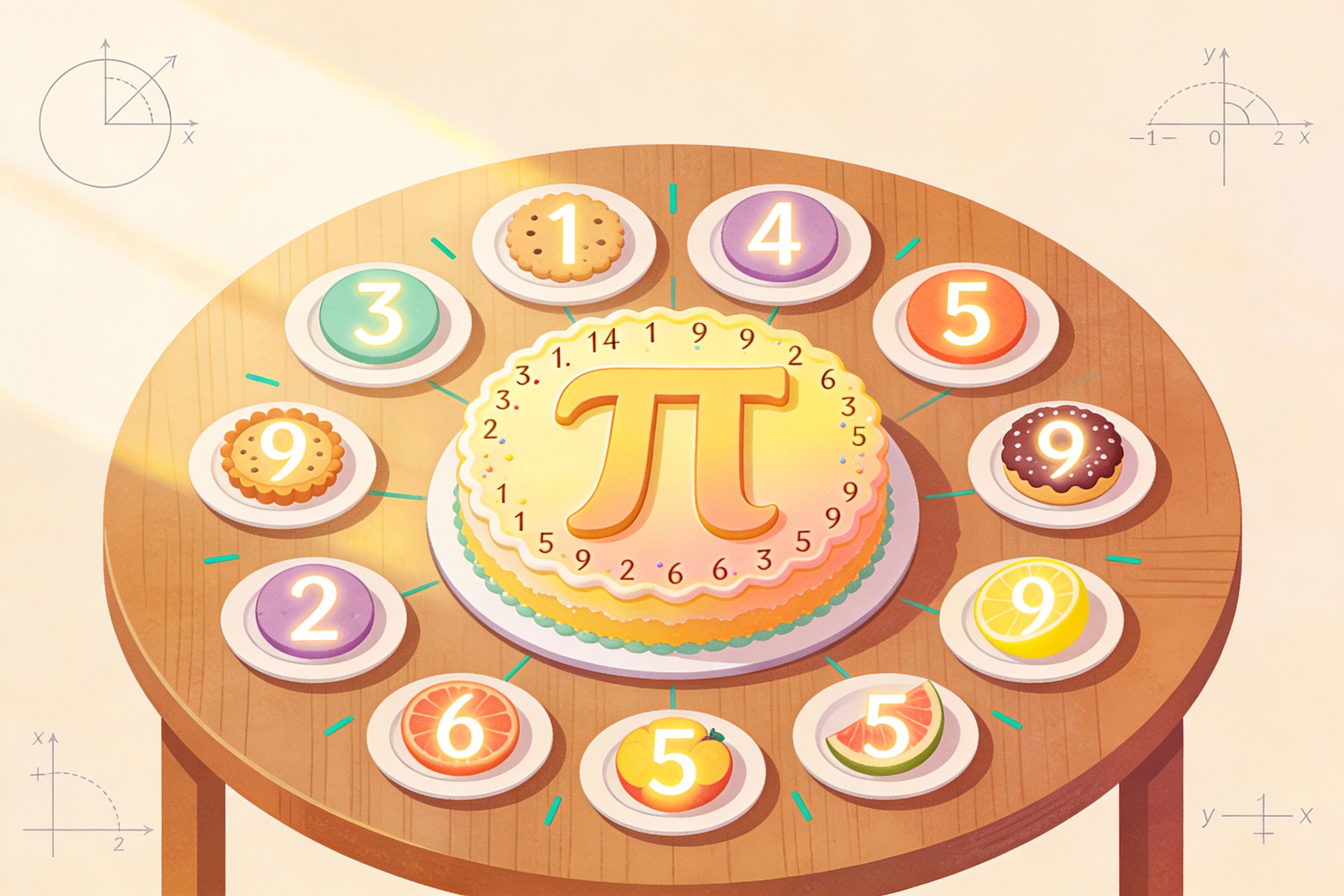
Every March 14, fans of Pi Day cheer for the world’s most famous number, 3.14159 and counting. Some celebrate by eating pizza or pie; others by testing how many digits of π they can recite before tripping over themselves.
But behind those contests is a fascinating truth about the human brain. The people who memorize hundreds or even tens of thousands of digits aren’t born with photographic memories. They’ve trained their minds using mental frameworks that reach back thousands of years. Their secret isn’t superhuman recall; it’s strategy, structure, and a deep understanding of how memory really works.
Why Pi Makes the Perfect Memory Test
Pi is an irresistible challenge for anyone obsessed with memory. It never ends, never repeats, and never gives an obvious pattern to latch onto. Every digit demands genuine recall, not clever guessing.
So when memory athletes, the people who compete in events like the World Memory Championships, choose to tackle pi, they’re testing themselves against randomness itself. The current record holders can recall over 70,000 digits, each one in perfect order.
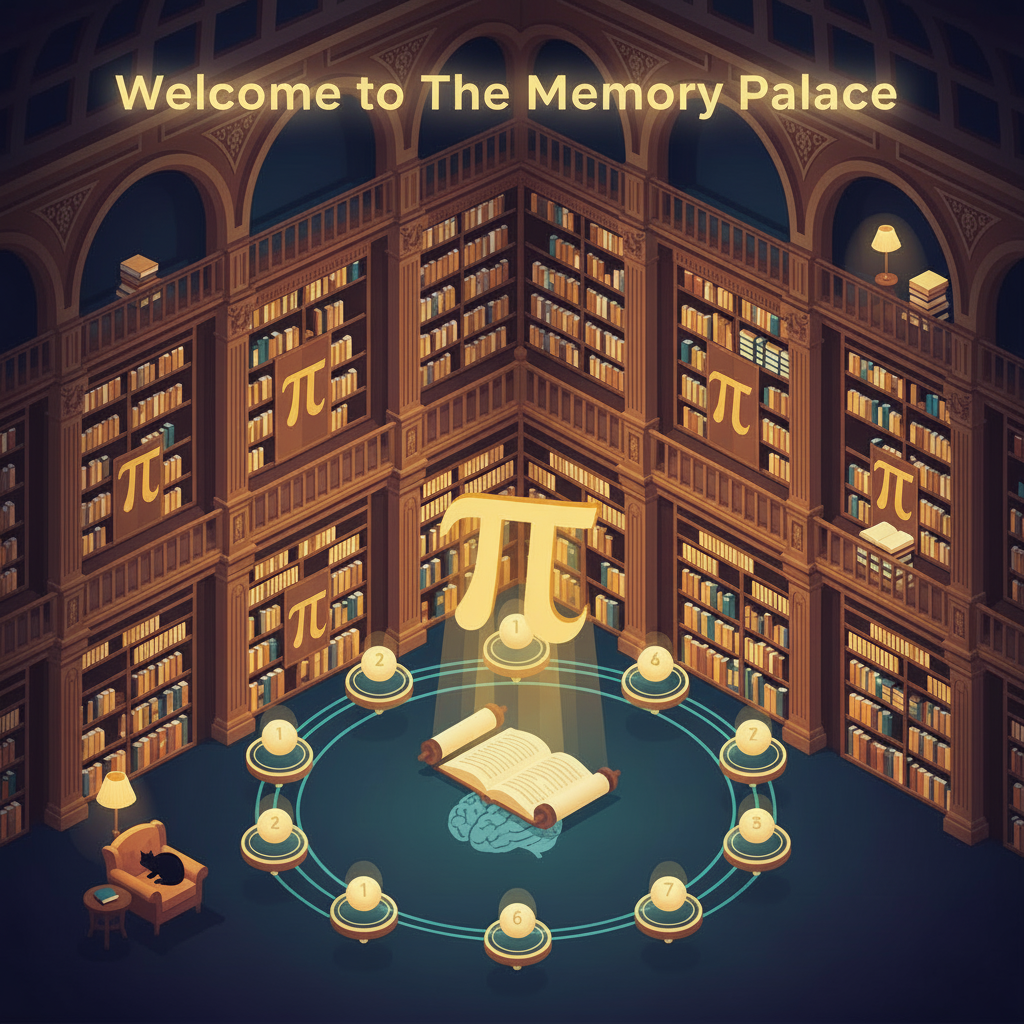
That number sounds unreal until you learn about the simple psychological tools involved. The methods come not from modern neuroscience labs, but from a trick used by ancient Greek orators trying to remember their speeches: the method of loci, also called a memory palace.
The Memory Palace: An Ancient Brain Hack
Imagine you’re walking through your childhood home. You can probably picture it effortlessly, the color of the front door, the squeak in the hallway, which window always caught the morning light. You might not have thought about it for years, yet that map is still sitting in your brain, vivid as ever.
The memory palace technique taps into exactly that sense of place. Instead of trying to “remember” abstract information like numbers or lists, you mentally place each item inside a familiar location.
Here’s how memory athletes use it with pi:
Choose a place you know well: a house, a route to school, a favorite park.
Break pi’s digits into small chunks (say, groups of three or four).
Turn each chunk into an image or a story. For instance, “314” might become “Mr. Bean holding three pies and four pencils.”
Place those images along a path through your chosen space. One in the doorway, one at the sofa, one by the fridge, and so on.
When you “walk” through that mental space later, the images trigger each group of digits.
It sounds whimsical, but science shows it works. Humans are extraordinarily wired for spatial memory. Evolution rewarded the brains of people who could remember landscapes, paths, and landmarks. When you use a memory palace, you’re hijacking a system your brain already excels at.
What Science Says About Why It Works
Neuroscientists have examined what distinguishes memory champions from the average person. Interestingly, scans show that their brains don’t have larger memory centers or exotic structures. The difference appears in which regions they use.
A 2017 study published in Neuron found that elite memory competitors activate networks related to spatial navigation and visualization, not raw storage capacity. These are the same brain circuits that help you remember how to get from your kitchen to your mailbox.
When researchers trained ordinary volunteers in the memory‑palace technique for just six weeks, brain scans showed the same pattern of activity, and the participants’ memory scores quadrupled. They didn’t become savants; they simply learned to code abstract information into a system their brains naturally favor.
In other words, our brains are not filing cabinets; they’re maps. And pi, a landscape of unpredictable numbers, becomes easier to travel when you give it memorable landmarks.
The Neuroscience of Meaning and Emotion
Another key to these methods is that they turn meaningless data into stories. The brain loves narrative and novelty; it remembers the weird, the funny, the emotional.
A digit sequence like “9265358” means nothing by itself, but if you imagine a giraffe (9) juggling two pies (26) while slipping on a banana (53) and dropping eight marbles (58), you’ve made it unforgettable. Silly pictures stick because they trigger more neural connections: visual, emotional, linguistic, and sensory, all at once.
Cognitive psychologists have long demonstrated that memory improves when information is encoded through multiple senses or associations. This idea, known as dual coding theory, explains why combining images and words doubles retention. Memory athletes take this concept to its limit; they layer humor, movement, and vivid imagery onto data that would otherwise be flat.
Pi as a Playground for Attention Training
Rehearsing pi isn’t just party‑trick material. Many competitors describe it as a kind of mental meditation. When they walk through their memory palace, every step is controlled attention: they have to stay focused on the mental image, the sequence, the path.
From a neuroscience standpoint, that act of focus strengthens the brain’s default mode network and attentional control circuits. In a small but growing body of research, scientists have found that structured memory training can improve concentration, working memory, and even emotional regulation.
So yes, memorizing pi might look like a number obsession, but beneath the surface, it’s attention practice disguised as fun. It’s the brain’s equivalent of a long jog or a carefully paced yoga session.
How You Can Try It (Without Memorizing 70,000 Digits)
You don’t have to be a professional memory athlete to experience how powerful a memory palace can be. You can use the same technique for everyday things: remembering names at a party, studying vocabulary, or even your grocery list.
Try this simple exercise:
Pick five locations you know extremely well in order, perhaps walking from your driveway to your kitchen.
Turn what you need to remember into images. “Milk” might become a cow dancing in the hallway. “Eggs” become bouncing suns on the table.
Imagine them vividly in each spot as you mentally “walk” the route.
When you retrace it later, you’ll be surprised at how easily the items surface.
This trick is ancient; Cicero wrote about it in 55 BCE, and it still outperforms rote memorization because it works with your brain’s design, not against it.
Why Pi Still Captivates Us
At first glance, pi seems cold and abstract: a number stretching to infinity, nothing but digits after 3.14. Yet human beings have given it warmth and culture. We celebrate it with pies, songs, and fun contests because, in a way, it represents the limitlessness of curiosity.
Memory athletes approach pi not for the digits themselves but for what those digits teach them about the mind. Every chunk they memorize is another experiment in how far attention, imagination, and discipline can go.
It’s also strangely poetic. Pi describes the geometry of a perfect circle, something with no beginning or end. The act of memorizing it becomes a metaphor for our circular search for mastery, looping from ancient techniques to modern neuroscience and back again.
The Bottom Line
The ability to memorize pi, or anything else, is not a gift from birth. It’s a learned skill built on a few repeatable principles:
Spatial organization: Use strong visual or spatial anchors (memory palaces) to store information.
Imagery and emotion: Turn cold data into stories that ignite multiple senses.
Consistent practice: Revisit your “memory route” regularly until recall feels effortless.
Focus training: Attention fuels memory; the techniques themselves sharpen focus over time.
So the next time you hear someone rattling off dozens of digits of pi, don’t think “Wow, what a weird talent.” Think: “Wow, what a clever use of how the brain already works.”
Because memorizing pi isn’t really about numbers, it’s about learning what the human mind can do when it stops fighting itself and starts using its built‑in architecture for memory, space, and imagination.
And maybe that’s the real magic of pi: it reminds us that infinity isn’t just a property of numbers. It’s a property of the mind itself.