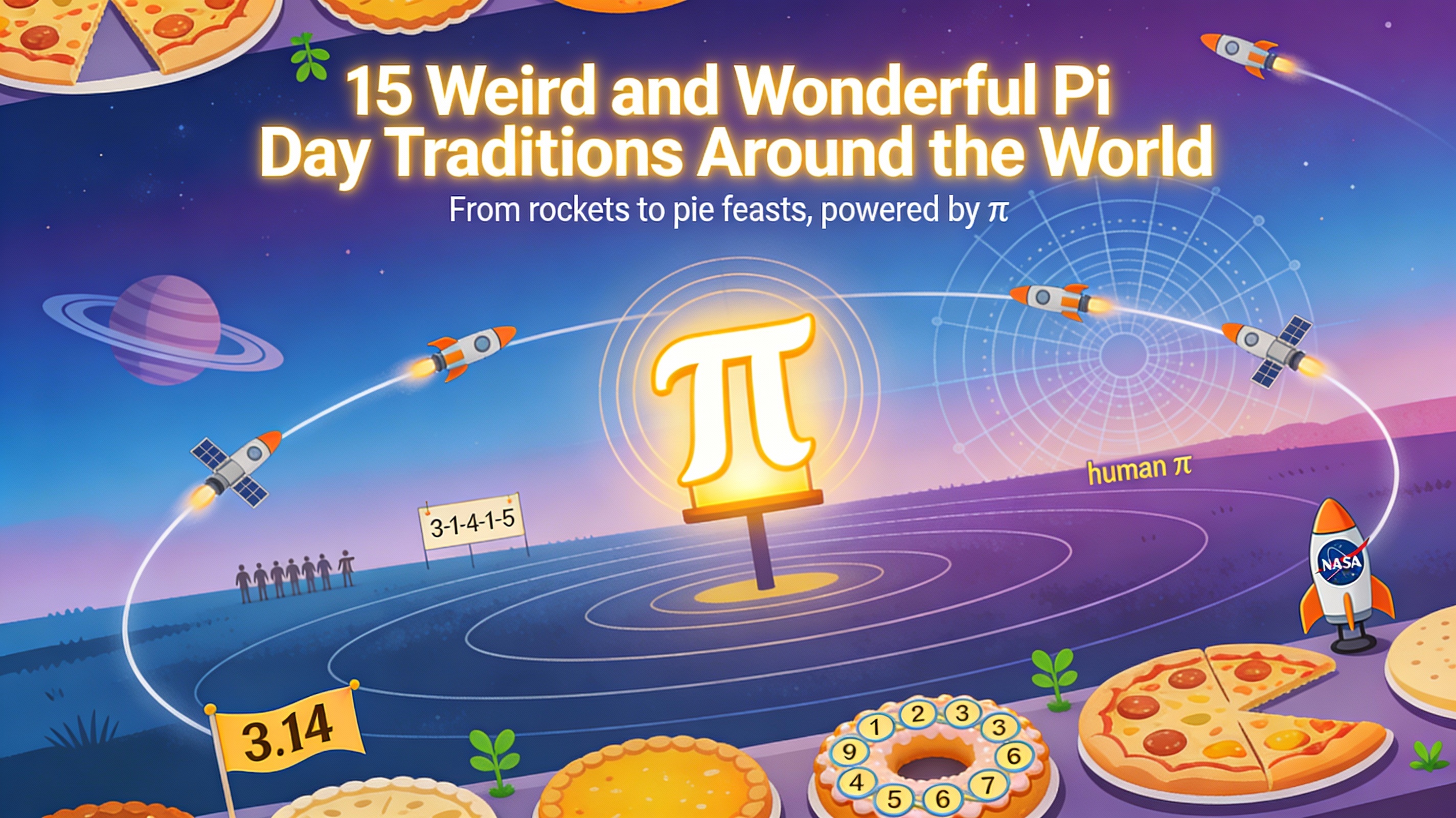
15 Weird and Wonderful Pi Day Traditions Around the World
From classrooms and campuses to social media feeds and even space agencies, Pi Day has grown into one of the most creative math celebrations on the planet. What started as a clever nod to 3.14 has become a global excuse to mix math, food, games, and imagination.
So without further ado, let’s take an international journey through 15 weird and wonderful Pi Day traditions, and see how PracticePi fits right into the fun.
1. The Great Pi Day Pie Feast
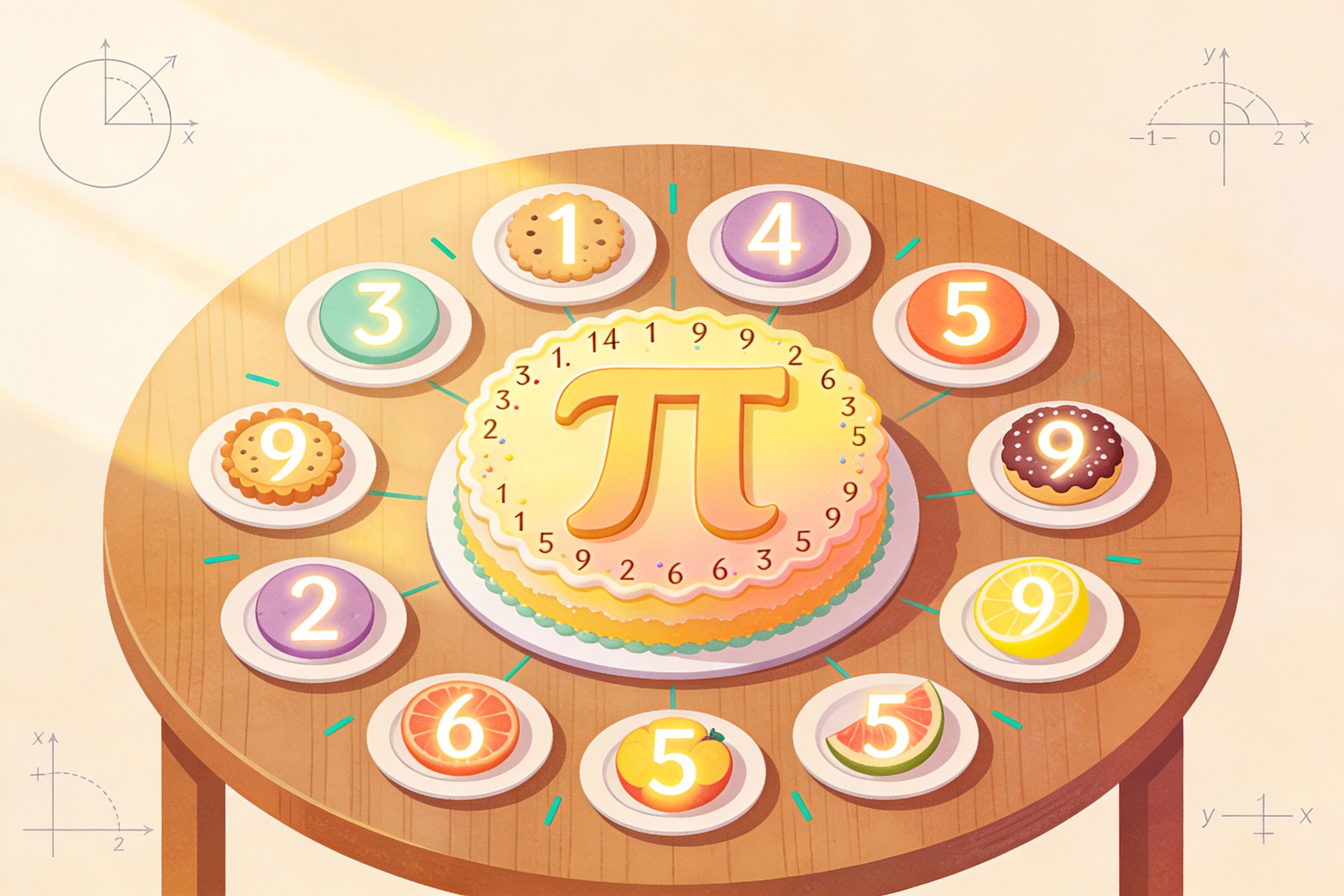
In classrooms across the U.S. and beyond, Pi Day is basically a socially acceptable excuse to eat as many circular foods as possible:pies, pizzas, pancakes, pitas, pineapples, and donuts. Many schools make it official with “Pi(e) Parties,” where students measure the diameter and circumference of pizzas or pies before devouring them.
PracticePi tie‑in:
Have students earn “pie tickets” by hitting Pi score milestones in PracticePi. Each new digit range unlocks a topping, flavor, or slice choice.
2. NASA’s Space‑Themed Pi Day Challenges
NASA leans into Pi Day with annual “Pi in the Sky” challenges: real NASA‑style problems that use pi to explore Mars landings, asteroid fly‑bys, and ring systems. Educators worldwide use these as classroom projects, blending astronomy and math in a way that feels anything but abstract.
PracticePi tie‑in:
Run a “Pi in Space” day: warm up with PracticePi digit drills, then tackle one NASA challenge as a class.
3. Pi Day Scavenger Hunts
Schools love turning Pi Day into a campus‑wide scavenger hunt. Students solve circle or pi‑related clues to find the next location: three markers, one notebook, four folders, one eraser, five sticky notes—3‑1‑4‑1‑5 built into the clue set.
PracticePi tie‑in:
Every time a group reaches a clue station, they must collectively recite a certain number of digits they’ve practiced in PracticePi before getting the next hint.
4. Human Pi Symbols on the Field
One surprisingly common Pi Day photo op: entire classes or even whole schools lining up outside on a field in the shape of the π symbol. Some schools bring in a drone or use the second‑floor windows to snap a big overhead shot for the yearbook, with everyone yelling “Pi!” instead of “cheese.”
PracticePi tie‑in:
Make “join the human π photo” a perk for students who reach a certain Pi score in the app.
5. Whole‑School Pi Day Festivals
Some schools go all‑in, turning Pi Day into a cross‑curricular festival. Math classes run pi puzzles and digit contests; language arts classes write pi poems; social studies explores the history of pi across civilizations; science classes model orbits and waves using pi.
PracticePi tie‑in:
Set up a Pi Day “passport.” One station is a PracticePi booth where students try to beat their previous best and get a stamp for crossing a new digit milestone.
6. Princeton’s Einstein Look‑Alike and Pi Week
Princeton, New Jersey, where Einstein lived, throws an entire Pi Day/Einstein birthday festival: Einstein look‑alike contests, pie‑throwing events, pie‑eating, and pi recitation competitions, sometimes with prizes like $314.15 for the winners.
PracticePi tie‑in:
Host a “Dress Like a Genius, Think Like a Genius” contest: students show up in their best “math hero” look and then try to push their Pi score in PracticePi.
7. Guinness Records: Pi Recitation Marathons
Pi Day is a natural time to attempt or celebrate Guinness World Records. Historically, some record holders have recited tens of thousands of digits for hours at a time. More recently, Guinness has featured records like “most decimal places of pi recalled in one minute.” In 2025, 10‑year‑old Alberto Davila Aragon recalled 280 digits of pi in 60 seconds using rhythm and breathing techniques.
PracticePi tie‑in:
Run a “mini‑Guinness” competition in class: one‑minute PracticePi sprints to see who can accurately recall the most digits, then compare to Alberto’s 280‑digit benchmark.
8. “Pie in the Face” Incentive Contests
Some schools spice up their pi recitation contests with a very motivating prize: if a student hits a certain digit count, they get to pie the principal or a teacher in the face. One UK student’s journey to a world record started with exactly that kind of contest.
PracticePi tie‑in:
Let classes earn “pie tokens” in PracticePi. If the class reaches a collective digit goal, they unlock the right to vote on which adult gets pied.
9. Pi Cosplay and Fandom Mash‑Ups
Pi Day has escaped the classroom and wandered into fandom culture. You’ll find social posts and cosplay of everything from Castiel (Supernatural) holding a π‑day sign to Fallout and SpongeBob Pi Day fan art and reels. It’s math meets Comic‑Con.
PracticePi tie‑in:
Invite students to design their own Pi Day avatars or fan art and share screenshots of their Pi score from PracticePi alongside their creations.
10. Pi Art, Mandalas, and Digit Designs
Art teachers and math clubs collaborate on pi‑inspired art: spirals where each color represents a digit, pi‑digit barcodes, circular mandalas based on digit sequences, and hallway murals that wrap around with digits of pi.
PracticePi tie‑in:
Assign each digit chunk a color based on how confidently a student can recall it in PracticePi. Use those colors to create a visual “heat map” poster of your class’s collective pi knowledge.
11. Pi Day Bake‑Offs
Pi Day bake‑offs are now a thing: students, parents, or staff bake pies decorated with π symbols, digit spirals, or math jokes. Judges rate entries on taste, creativity, and mathematical flair.
PracticePi tie‑in:
Add a “digit challenge” twist: contestants must correctly recite a certain number of digits—verified in PracticePi—before the judges taste their pie.
12. Pi Day Scavenger Numbers and 3.14‑Themed Prizes
Some communities give out oddly specific Pi Day prizes: $3.14 gift cards, $31.41 vouchers, or $314.15 cash awards for top contest winners. Others do activities like collecting 3 of one item, 1 of another, 4 of another in order—living out 3‑1‑4 in a very literal way.
PracticePi tie‑in:
Create digital badges in PracticePi named “3,” “.14,” “.159, etc., that unlock as students hit certain digit thresholds.
13. Cross‑Subject Pi Night Events
Some schools host evening “Pi Night” events that invite families to campus, featuring math games, history talks on ancient pi approximations, science demos, pie tastings, and pi recitation contests.
PracticePi tie‑in:
Have a PracticePi “family challenge corner” where parents and students try the app together and see who can learn more digits in 10 minutes.
14. Social Media Pi Day Flood: Hashtags, Reels, and Memes
Social feeds around March 14 are full of Pi Day memes, short videos, stock images, and reels tagged with #PiDay and #PieDay, everything from aesthetic pie photos to nerd jokes, cosplay, and birthday posts tied to 3/14.
PracticePi tie‑in:
Encourage users to post a split‑screen: their favorite Pi Day food on one side, their PracticePi Pi score on the other, with a branded hashtag like #PracticePiDay.
15. Student‑Driven Records and Micro‑Challenges
Beyond official Guinness records, many classrooms and clubs run their own “micro‑records”: most digits in the grade, most digits in one minute, fastest improvement over a week, or longest family chain (each person adds a digit).
PracticePi tie‑in:
Use the app’s data to track:
“Most new digits learned this week.”
“Longest streak of daily practice”
“Class with the highest average Pi score”
Then celebrate those wins on Pi Day with certificates, shout‑outs, or, yes, more pie.
Make PracticePi Part of Your Pi Day Tradition
All of these traditions have one thing in common: they take something abstract, π, and make it feel personal, social, and fun. PracticePi fits naturally into that ecosystem:
Before Pi Day, students use PracticePi to set personal digit goals.
On Pi Day, those goals turn into challenges, contests, and rewards.
After Pi Day, the app keeps the momentum going, so Pi isn’t just a once‑a‑year event.
If you’re a teacher, parent, or student planning your next 3/14, you don’t have to reinvent the wheel (or the pie). Borrow one of these weird and wonderful traditions, plug PracticePi into the middle of it, and you’ll have a Pi Day that’s memorable for both brains and taste buds.