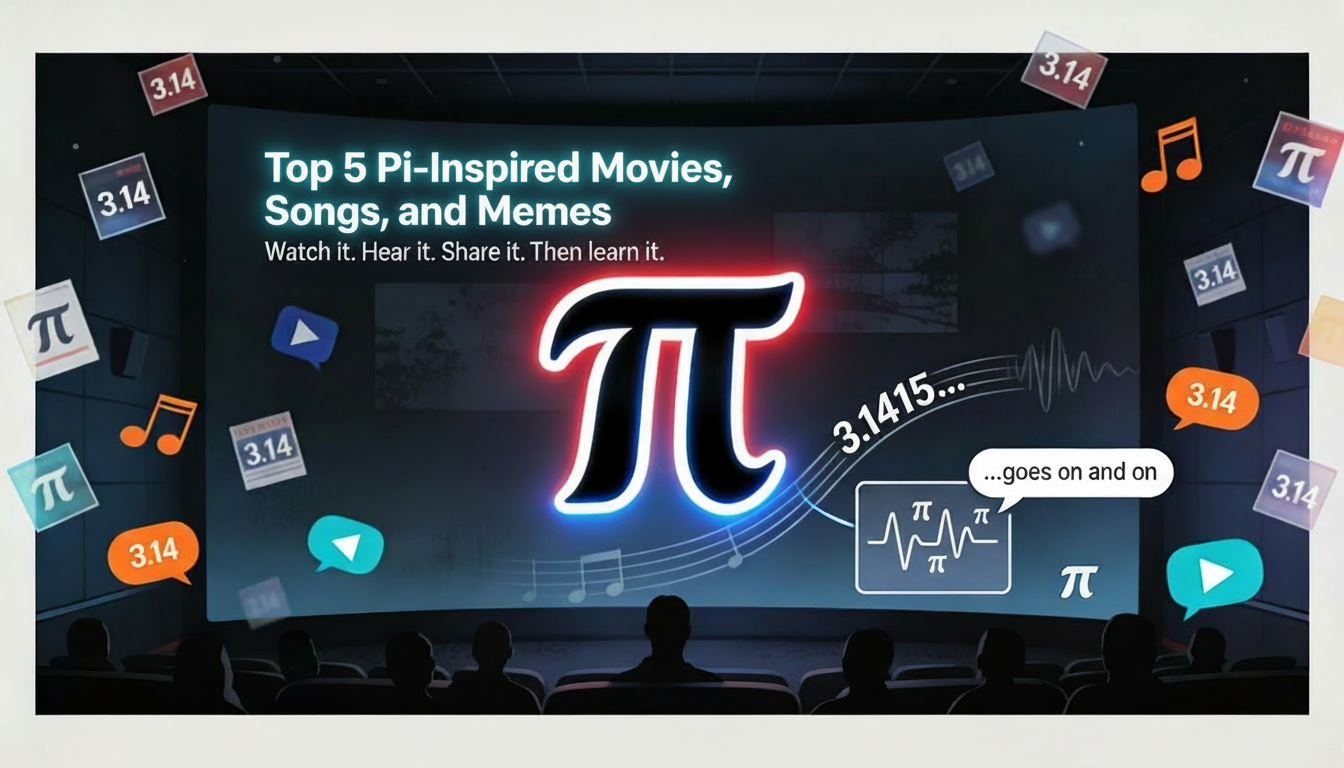
Top 5 Pi-Inspired Movies, Songs, and Memes
Pop culture has done something wild with pi: it’s turned this quiet little math constant into mood, music, drama, and pure chaos. You can watch it in a black‑and‑white thriller, hear it in indie songs, and scroll past it in meme after meme every March 14.
If you’re trying to get yourself excited about practicing digits in PracticePi, tapping into these movies, songs, and jokes is one of the easiest ways to make pi feel like it actually lives in the real world, not just in a textbook.
Here are five pi‑inspired favorites, plus ideas for how to use each one to spark curiosity and learning.
1. Pi (1998 Rated R): When Obsession Meets Mathematics
Darren Aronofsky’s Pi is the movie you bring up when someone says, “You can’t make an intense thriller about math.” The film follows Max Cohen, a brilliant but unraveling mathematician convinced that everything, from stock markets to nature, hides patterns he can decode, including in the digits of pi.
It’s:
Gritty and surreal, shot in high‑contrast black and white.
Packed with references to number theory, computers, and even mysticism.
A cautionary tale about what happens when “searching for patterns” turns into “I can’t turn my brain off.”
How to use it with PracticePi:
Ask: “What’s the healthy version of Max’s obsession?”
Let that question lead into a conversation about using structure, breaks, and tools like PracticePi to make intense focus productive instead of destructive.
Frame PracticePi as a way to explore pi without losing sleep over it.
2. “Pi” by Kate Bush: Turning Digits into a Dream
Kate Bush has a song literally called “Pi”, and yes, she sings the digits. In her track from Aerial, she floats through a string of pi’s decimals as part of a story about a man obsessed with numbers.
What makes it stand out:
It isn’t a novelty song; it’s genuinely beautiful and weird.
The digits become part of the rhythm and melody, not just a recital.
It’s a great reminder that math can show up in art in emotional ways, not just technical ones.
PracticePi idea:
Play a short, age‑appropriate clip and ask, “How many digits did you catch?”
Then ask students to see if they can beat that count using PracticePi over the next week.
For creative classes, challenge them to write a tiny “pi verse” of their own using the digits they know.
3. YouTube Pi Songs: From Earworms to Memory Weapons
YouTube is basically a bottomless pit of pi songs:
“The Irrationally Long Number Pi Song (Sweet Number Pi)” turns pi into a catchy, pop‑style earworm packed with digits.
Educational creators post songs like “Irrational Number (Pi Part One)”, written specifically to help learners remember pi and understand why it never ends.
There are tongue‑in‑cheek tracks like “You are Irrational (Love Song for a #)” that explain irrational numbers like they’re complicated relationships.
Students often remember lyrics way more easily than plain numbers. That’s exactly the point.
PracticePi idea:
Let students pick a Pi song they like.
Have them practice in PracticePi right after listening.
At the end of the week, talk about whether the song actually helped them recall digits faster or more accurately.
Bonus: let them rate songs by “catchiness vs. memorization power.”
4. Pi Day Memes: When Math Becomes Snackable
If you’ve ever opened social media on March 14, you’ve seen the flood: Pi Day memes as far as the eye can scroll.
Some greatest hits:
Jokes about “having more than 3.14 slices of pie” on Pi Day.
Side‑by‑side images of π and pie, playing on the pronunciation.
Groan‑worthy puns like “Never talk to pi, it just goes on and on.”
Education sites round up meme collections specifically for teachers who want something quick to drop into a slideshow or warm‑up that makes kids smile instead of instantly zoning out.
PracticePi idea:
Start class by posting one meme on the board and asking students to rate it 1–10.
Then say, “Okay, let’s see how many digits we can ‘earn’ for our own meme” and run a short PracticePi session.
Challenge them to create their own Pi Day meme using the number of digits they’ve learned as part of the joke (“My brain after 50 digits of pi…”).
5. Pi Fan Art and Cosplay: Nerd Culture Meets Math
Pi has quietly slipped into fan culture:
Artists post Pi Day illustrations, character art, digit spirals, and “Happy Pi Day” pieces on platforms like DeviantArt.
Cosplayers show up on social feeds with math‑themed outfits and props: pi symbols, circle motifs, or mash‑ups like popular characters holding Pi Day signs.
Pi Day gets tagged alongside fandoms in reels and posts, becoming one more excuse to dress up and be extra.
This matters because it shows students that math isn’t separate from the things they love; it’s already woven into the spaces they hang out online.
PracticePi idea:
Run a “Pi + Fandom” mini‑project:
Step 1: Students set a realistic Pi score goal in PracticePi (10, 25, 50 digits, etc.).
Step 2: When they hit it, they create a small fan art piece, a doodle, or a concept sketch combining their fandom and pi.
Celebrate their work (with permission) in a hallway display, a class blog, or a Pi Day slideshow.
Why This Pop‑Culture Angle Helps Learning Stick
Bringing in movies, songs, and memes isn’t “extra fluff.” It does two important things:
It makes Pi feel like it belongs in normal life.
When students see pi in a movie, hear it in a song, or laugh at it in a meme, it stops being an abstract symbol and becomes part of the culture they live in.It gives their brain more hooks.
Memory works best when information is connected to emotions, stories, and experiences. A song they liked, a meme they shared, or a film they discussed in class makes the digits they practice in PracticePi easier to recall later.
If you want learners to go beyond “3.14” and actually have fun pushing their own pi records, meet them where they already are:
Let them watch something pi‑inspired.
Let them listen to something pi‑inspired.
Let them laugh at something pi‑inspired.
Then, when they’re curious and a little bit hyped, point them to PracticePi and say:
“Okay. Now it’s your turn. How many digits can you carry around in your head?”